climate
The Great Oil Spill Decline: How Tanker Disasters Became Rare 🛢️
In the 1970s , the global oil trade had a dirty secret—literally. Oil tankers, the massive ships carrying crude across oceans, spilled oil with alarming regular
Timothy Pesi · 2026-09-01
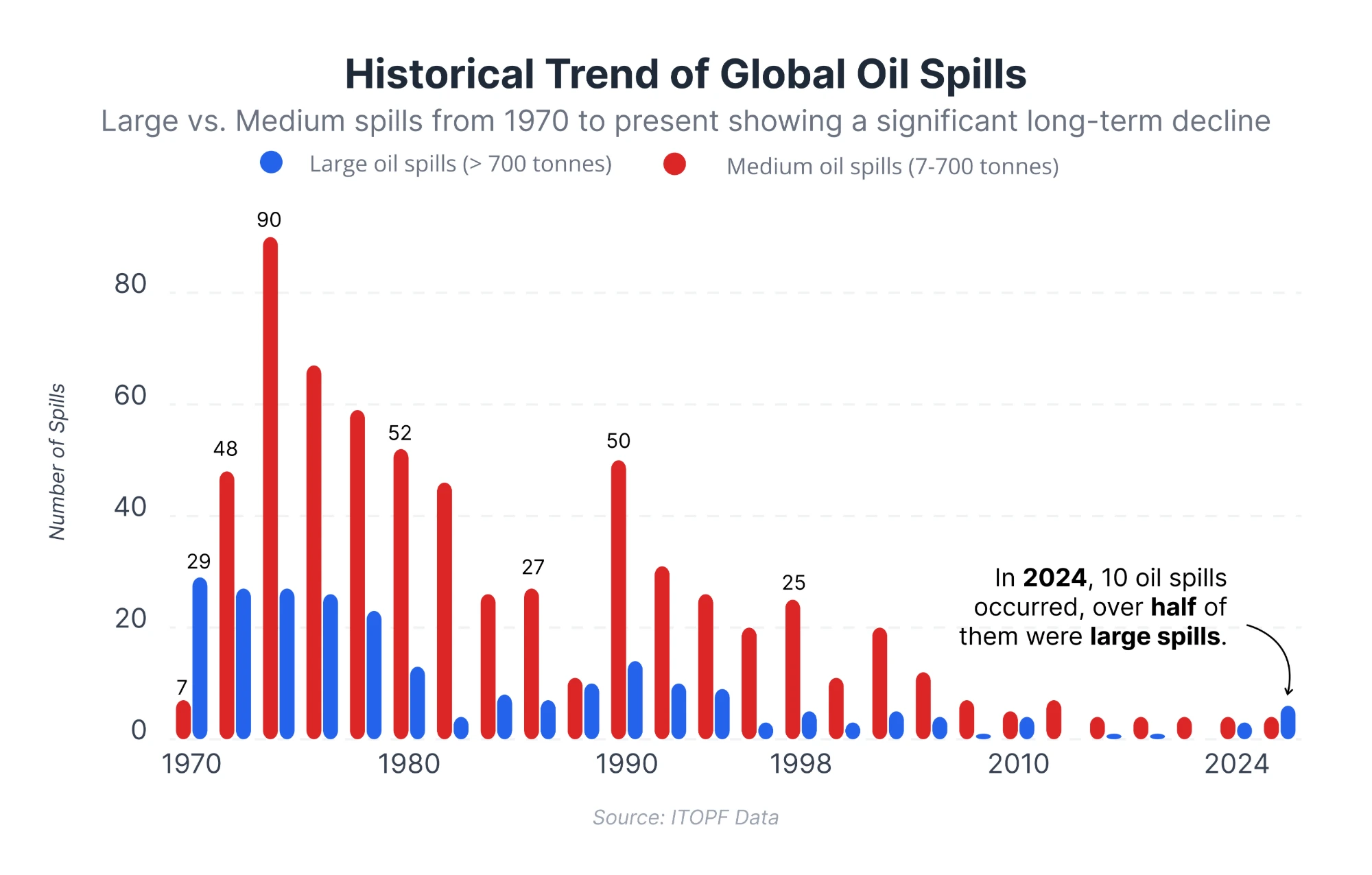
In the 1970s, the global oil trade had a dirty secret—literally. Oil tankers, the massive ships carrying crude across oceans, spilled oil with alarming regularity. Between 70 and 100 tanker spills occurred every year, turning the world's shipping lanes into environmental hazard zones. At the time, a spill every week was almost routine.
Today, that world looks very different. Modern regulations, better ship design, and stricter monitoring have quietly engineered one of the most dramatic environmental improvements in industrial history.
Let's dig deeper.
The wild west of oil shipping
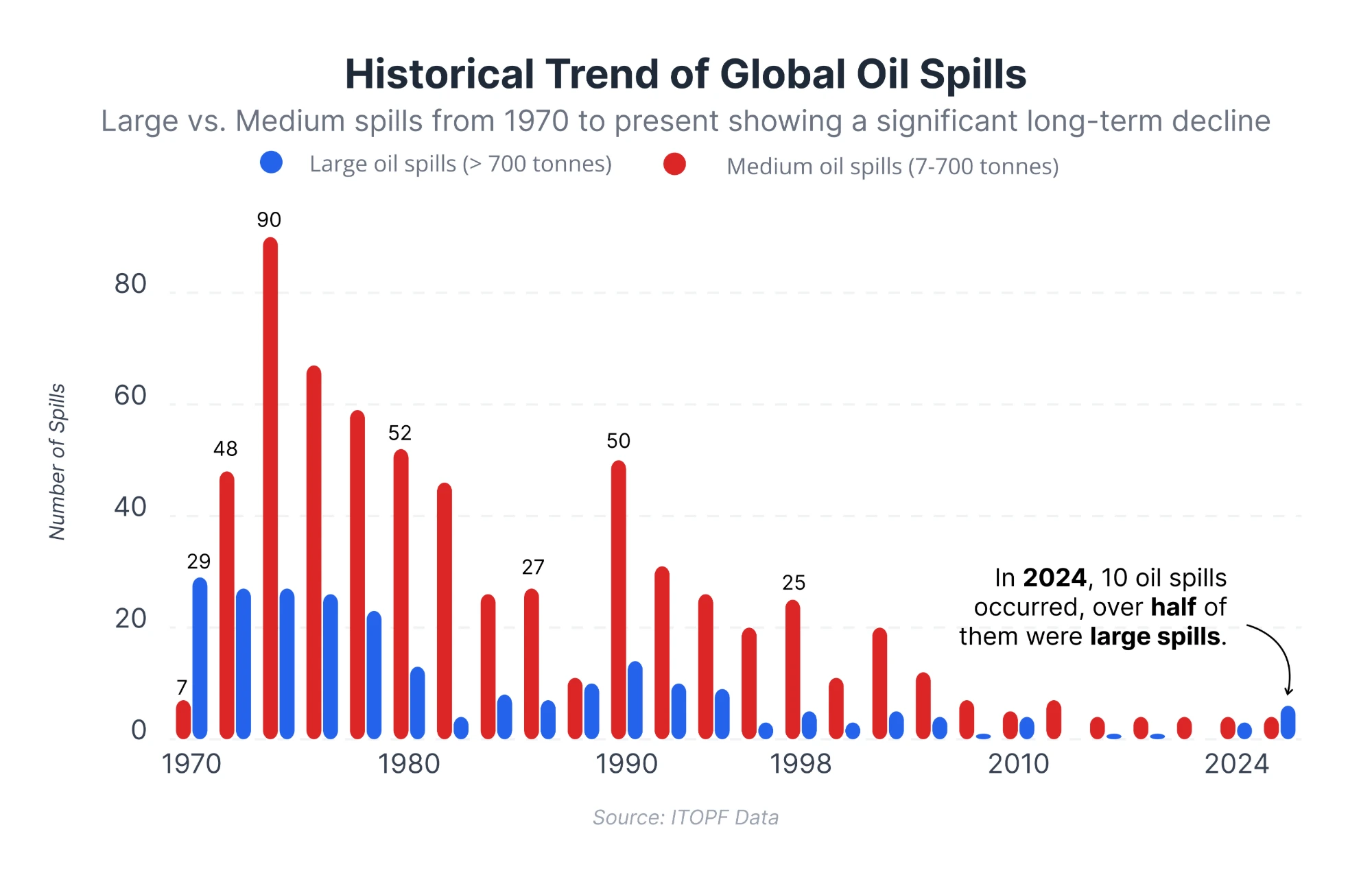
In the early decades of globalized oil trade, safety was often an afterthought. Tankers were smaller, single-hulled, and operated under looser regulations. The result was predictable. Throughout the 1970s, oil spills were commonplace. Some years saw close to 90 incidents, ranging from moderate leaks to catastrophic disasters. Tankers ran aground, collided, or broke apart during storms.
The oceans paid the price. The average amount of oil spilled annually exceeded 300,000 tonnes during the decade—a staggering figure that devastated coastlines, fisheries, and marine ecosystems. Environmental disasters like these helped spark the modern environmental movement and eventually forced the shipping industry to reform.
Let's review the data
The chart above tells the long story of tanker spills. From the chaos of the 1970s to the far more controlled shipping system of today, the decline is unmistakable. Over the last decade, no year has recorded more than ten oil spills worldwide. That represents a decline of more than 90% from the peak decades of tanker accidents.