tech
Kenya's Cybercrime Problem Has a Single Cause
The headline number suggests an epidemic spreading on every front. The Economic Survey's own tables say otherwise — one category of attack now accounts for almost the entire picture, and has done so for three of the last four years.
Visual Data Insights · 2026-09-01
Kenya's reported online crime incidents almost quadrupled in a single year, from 3.6 billion in 2024 to 12.5 billion in 2025. Put another way: with a population of roughly 57 million, that is enough reported incidents for every Kenyan to have been targeted about 220 times over. A number that size invites the obvious question — why did cybercrime explode?
If one category now accounts for nearly all of it, the obvious next question is what happened to the other four — and the answer is that they were not so much defeated as crowded out.
The Takeover
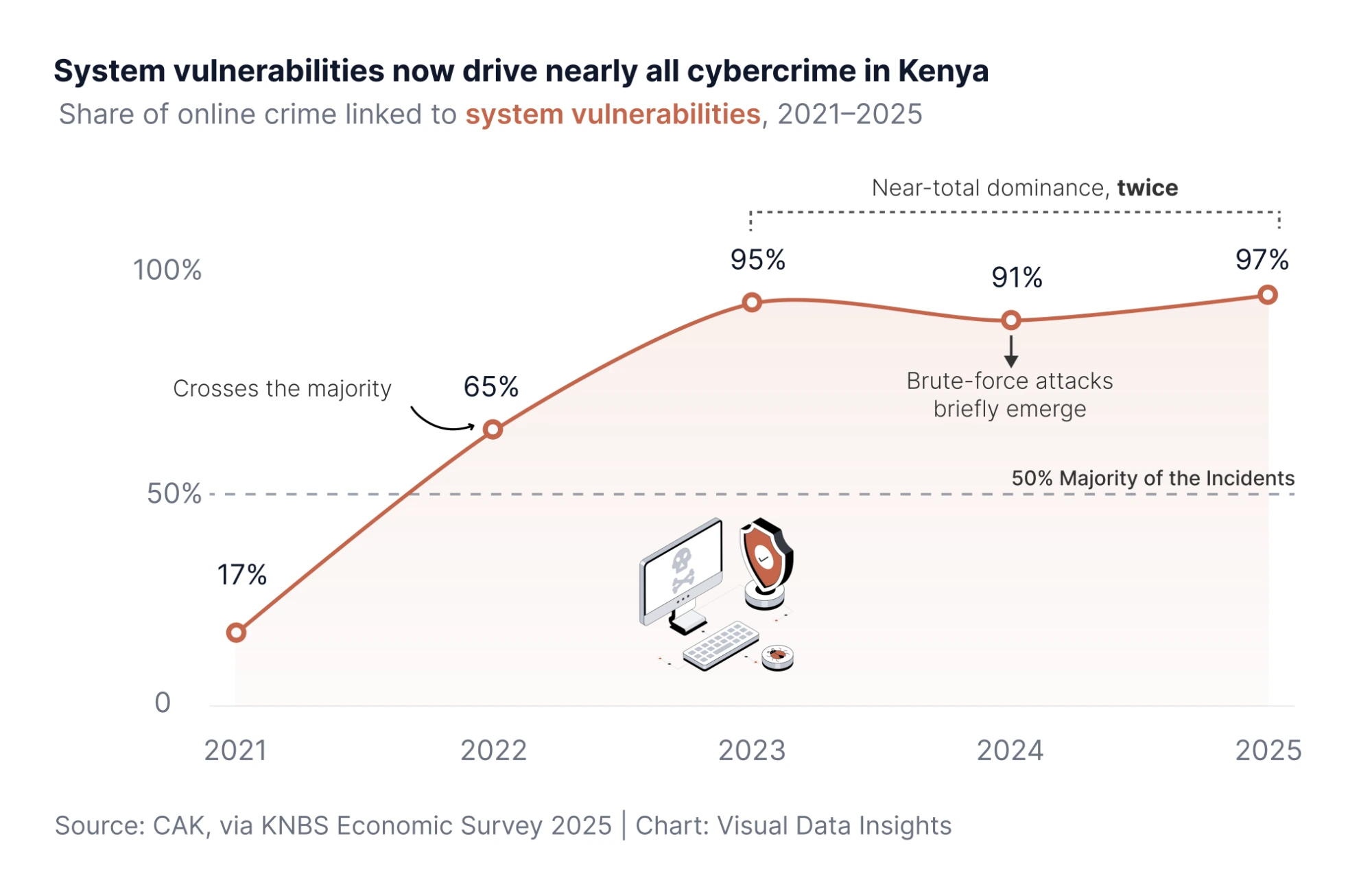
In 2021, malware (software built to damage or steal from a system) and bot nets (networks of hijacked devices used to flood a target offline) made up most incidents. System vulnerabilities were a distant third, at 17%. By 2022, they held the majority; by 2023, 95%. Malware fell from 54% to 1.4% over the same span — one category didn't just grow fastest, it absorbed the rest.
Total, except for one year that briefly broke the pattern.
The Exception
The dip looks less like a change in direction than a brief detour before attackers went back to the easiest door.
2024 breaks the pattern: vulnerabilities' share slipped to 91% as brute-force attacks — automated, repeated attempts to guess a password — appeared for the first time, at 3.5%. It didn't last. By 2025 vulnerabilities were back above 96% and brute-force had shrunk below 1%. If you reused a weak password that year, the data suggests you were briefly a more likely target than usual — then attackers moved back to easier ground.
The threat kept concentrating. Has the warning system kept up?
Falling Behind
Advisories rose 85% in 2025. Incidents rose 247% — nearly three times faster. For a business waiting on an official warning before it patches anything, that gap means the warning arrives further behind the threat each year, not closer to it.
One dominant cause, one brief interruption, one warning system losing ground. The next step is obvious.
The Fix Is Narrower Than It Looks
A malware-led crime picture is solved by better habits — fewer suspicious downloads, sharper phishing instincts. A vulnerabilities-led one, now 97% of the total, is solved by better systems: patched software, audited configurations, databases that aren't left exposed. The practical question isn't whether your team did phishing training this year. It's when your vendor last patched its servers.