politics
Devolution Opening Up ?
Four years ago, most Kenyan counties kept more of their budgets hidden than public. In 2025, the opposite is true — but a document uploaded is not yet a document understood.
Timothy Pesi · 2026-09-01
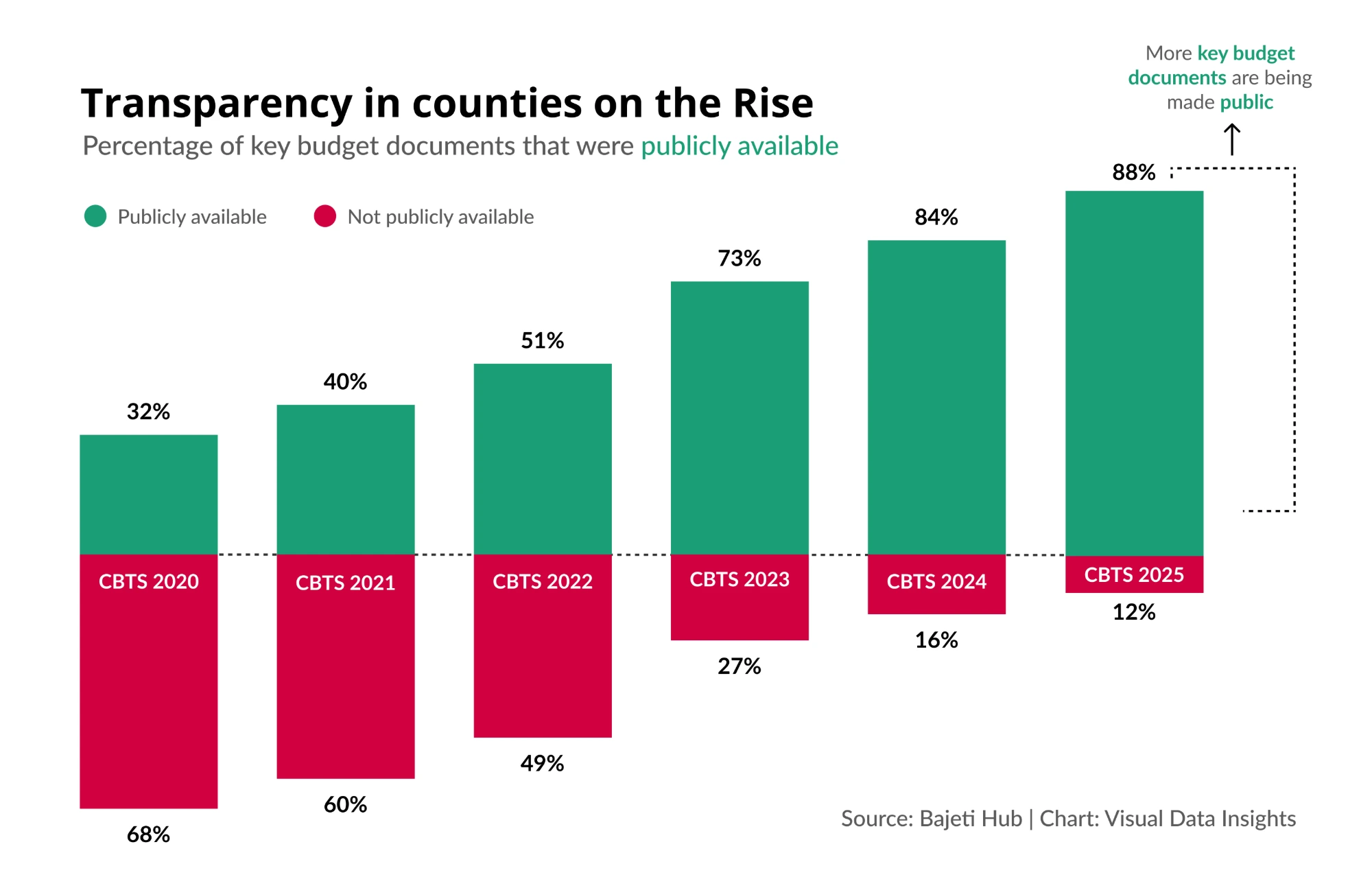
In 2020, a Kenyan county was more likely to keep its budget documents to itself than to publish them — only 32% of the ten key documents tracked by the survey were made public, the rest withheld. By 2025, that ratio has flipped and then some: 88% of key documents are now publicly available, and every one of Kenya's 47 counties published at least one, up from four counties that published nothing at all in 2020.
The Documents That Matter
These aren't bureaucratic formalities. The ten tracked documents include the Annual Development Plan, the County Fiscal Strategy Paper, the Programme-Based Budget, the Citizens Budget and quarterly implementation reports — the blueprints for everything from road construction and water access to education and health funding. In 2020, just one county published all ten.
Although counties overall increased the publication of key budget documents, the number of counties that published all ten budget documents evaluated in this survey fell from 24 in CBTS 2024 to 20 in CBTS 2025
Key documents tracked by CBTS
Annual Development Plan · County Fiscal Strategy Paper · Programme-Based Budget · Citizens Budget · Quarterly Budget Implementation Reports · and related statutory disclosures
What's Behind the Shift
No single reform explains the jump. Civil society groups have kept up steady pressure for years, while public demand for accountability has grown louder alongside it.
Openness Is Not Enough
Publication is a genuine win, but it is not the same as transparency in practice. Many of the documents counties now upload remain dense with technical jargon. A document being available on a portal does not mean it is understandable to the citizen trying to follow where road or health funding actually went.
The next frontier is usability: simplified summaries, visual tools and interactive formats such as data storytelling. The goal is to turn a disclosed PDF into information that residents can understand, question and act on.