economy
The 50/30/20 Budget Rule: A Simple Way to Manage Your Money
One rule splits take-home pay into fixed shares for needs, wants, and the future — the hard part isn't the math.
Visual Data Insights · 2026-09-10
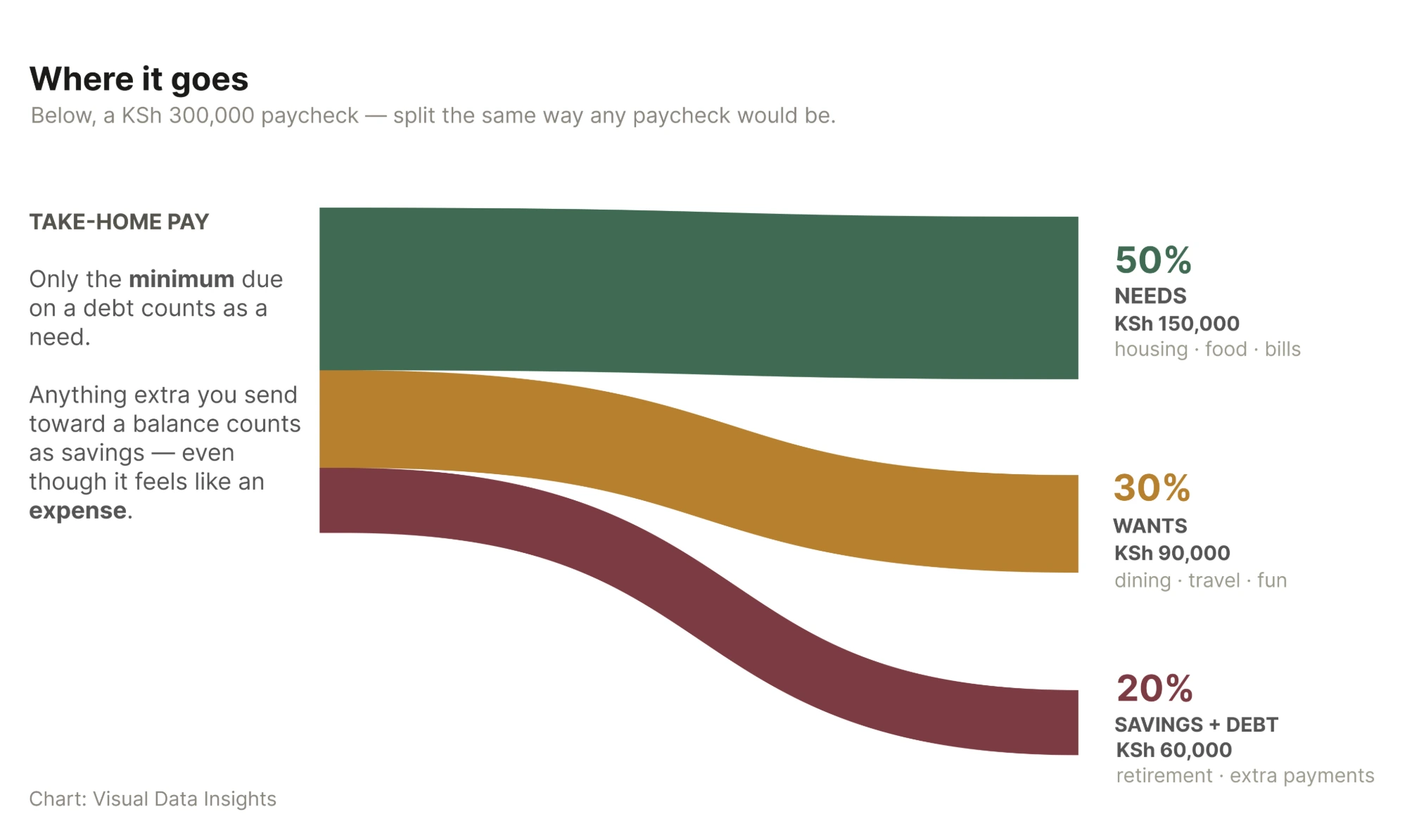
Every paycheck arrives with the same quiet question attached: what is this money actually for? In 2005, Elizabeth Warren and her daughter, Amelia Warren Tyagi, proposed an answer simple enough to do in your head — split take-home pay into three jobs, in fixed proportions, and stop relitigating every purchase.
The idea has outlasted almost every budgeting trend that followed it, mostly because it asks so little. Instead of tracking dozens of spending categories, it asks you to sort your life into just three: things you can't skip, things you enjoy, and money moving toward your future.
Three ways to do it
Alternative frameworks move the same three shares around — mostly in response to one problem: in much of the world, housing alone can already exceed half of take-home pay.
Try it yourself
Enter a monthly take-home amount to see the standard 50/30/20 split.
However the numbers land, the mechanism that makes the rule work isn't the math — it's automation. Money that has to be manually moved into savings tends to stay in checking. Money moved automatically, on payday, before it can be spent, tends to arrive where it was meant to go.